Why metal works in a snowy city
A smooth metal surface lets snow slide off. That lowers the load on your framing. It also cuts the chance of ice damming at the eaves, as long as the attic stays cold. A metal roof still needs airflow and insulation below it.
Metal also resists wind and fire. Many panels carry strong wind ratings. Owners who plan to stay in a home for 20 years or more often find metal pays off over time.
Metal roof styles
| Style | Look | Good fit | Trade-off |
|---|---|---|---|
| Standing seam | Clean vertical lines | Modern and farmhouse homes | Highest price. Needs skilled install. |
| Exposed-fastener panels | Ribbed panels | Garages, barns, budget jobs | Screws need checks over time |
| Metal tile or shingle | Looks like tile or slate | Brick and traditional homes | More seams and cuts |
Metal versus asphalt, side by side
Owners often weigh these two first. This table shows how they differ on the points that matter in West Michigan.
| Point | Standing-seam metal | Architectural asphalt |
|---|---|---|
| Upfront price | Higher | Lower |
| Typical lifespan | 40–70 years | 20–30 years |
| Snow shedding | Sheds fast. Needs snow guards. | Holds snow longer |
| Ice dam risk | Lower, with a cold attic | Same, with a warm attic |
| Repairs | Needs a metal specialist | Most roofers can fix it |
| Upkeep | Low. Check seams and trim. | Low. Check tabs and flashing. |
| Install time | Often longer | Often one to three days |
See our asphalt shingle guide for the other side of this table.
How the install works
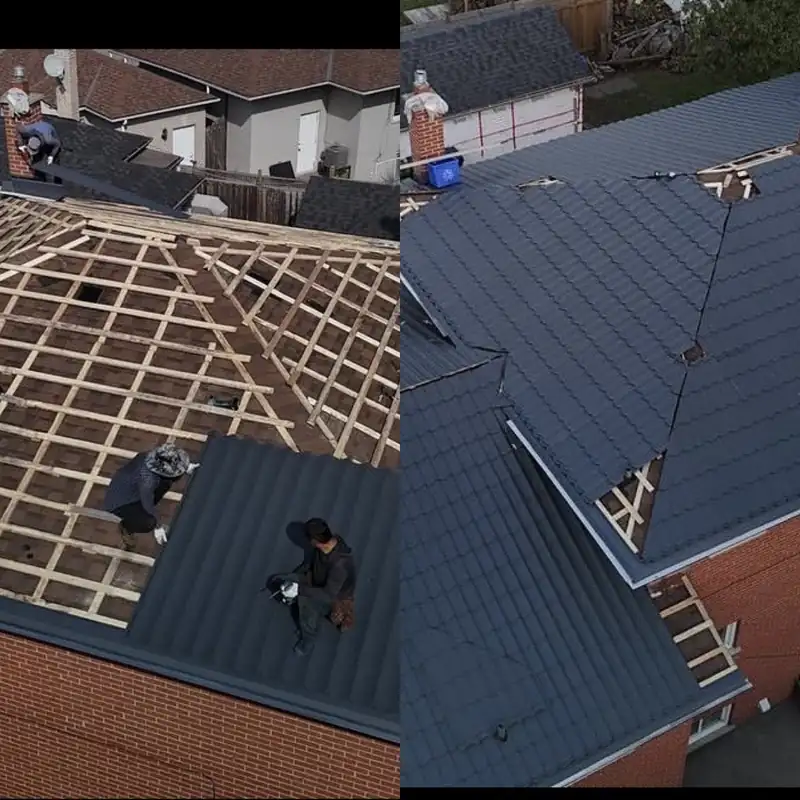
- Tear-off or overlay check. We check local rules and the deck. Most jobs start with a full tear-off.
- Deck repair. Metal needs a flat, solid base. Soft boards telegraph through the panels.
- Underlayment. A high-heat synthetic sheet goes down. It guards against condensation and leaks.
- Edge and valley metal. Drip edge, valley pans, and wall flashing go on first.
- Panels. The crew sets each panel square and fastens it by the maker's pattern.
- Trim, vents, and snow guards. Ridge caps, penetration boots, and guards finish the job.
The Metal Construction Association publishes technical guidance on panel systems. We follow the panel maker's written install steps.
Snow guards matter
Snow can slide off a metal roof in one big sheet. That is a risk over doors, walks, and driveways. Snow guards hold the pack in place so it melts in stages. We plan guard layout during the quote, not after.
Steel, aluminum, and copper
Most residential metal roofs use coated steel. Steel costs less than the other two and handles snow loads well. Aluminum resists rust, which helps near road salt and wet ground. Copper lasts the longest and turns green with age, but it costs far more. We help you pick based on budget, looks, and how long you plan to stay.
Gauge, coating, and color
Gauge measures steel thickness. A lower number means thicker steel. Many standing-seam panels use 24 or 26 gauge. Thicker steel resists dents and oil canning, which is a wavy look in flat panel areas.
The coating protects the color and the steel. High-grade paint systems resist fading for many years. Cheap coatings chalk and peel. Always ask for the paint system name and the finish warranty in writing. Lighter colors also reflect more summer heat, which can lower cooling costs.
Expansion, clips, and condensation
Metal grows and shrinks with temperature. Michigan swings from below zero to the 90s each year. Standing-seam panels ride on clips that let them move. Exposed screws cannot move the same way, so they need checks over time.
Warm indoor air can also condense on cold metal. A vented attic and the right underlayment stop that drip. This is another reason we check airflow on every job. Our ice dam guide explains how attic heat affects any roof.
Upkeep and insurance
Metal needs little care. Rinse off debris, clear gutters, and check seams and trim each spring. Do not walk on panels in wet or icy weather. Some insurers discount metal roofs, so call your agent before you decide. Ask what proof they want from the installer.
Common worries, answered
Is a metal roof loud in rain?
Not on a solid deck with underlayment. The noise most people remember comes from open barns, not houses.
Does metal attract lightning?
No. Metal does not raise the chance of a strike. It also does not burn.
Will it dent?
Heavy hail can dent thin panels. Thicker steel and certain profiles resist dents better. Ask for the panel gauge in writing.
Cost and lifespan
Metal costs more up front than asphalt. Panel type, roof shape, and trim details drive the price. A simple gable costs far less than a roof with many valleys. Typical lifespan runs 40 to 70 years, depending on the product and coating. Read our cost guide for how pricing works, and compare with asphalt shingles.
Metal roofs on older homes
Old plank decking can work under metal, but gaps and uneven boards need attention. We often add a layer of sheathing first. Historic districts may have design rules. Ask the city before you pick a panel profile.
Common questions
How long does a metal roof last?
Most last 40 to 70 years. Coating quality and installation affect that number.
Can you install metal over old shingles?
Sometimes, if local code allows and the deck is sound. Most Grand Rapids jobs start with a full tear-off so the crew can inspect the deck.
Do metal roofs need snow guards?
Often yes, especially over doors, walks, and driveways. Guards keep snow from sliding all at once.
Is metal worth the extra cost?
It can be for owners who stay 20 years or more. It lasts longer than asphalt and sheds snow well. Compare quotes on both.
Keep reading
Asphalt shingles
Shingle types, layers under the shingles, nailing, cost, and lifespan for Grand Rapids homes.
Roof installation cost
Sourced price ranges, cost drivers, and a line-by-line way to compare quotes.
Cedar and slate
Weight, upkeep, fire rating, and historic district notes for cedar and slate roofs.