Where additions leak
Most addition leaks start at the joint between old and new. Water finds gaps where a new wall or roof meets an older roof. Good flashing and careful layering stop that.
Grand Rapids owners add rooms, second stories, sunrooms, and dormers. Each project adds roof planes, valleys, and wall joints.
Four tie-in methods
Valley tie-in
Two roof planes meet in a valley. Metal or woven shingles carry water down. Layering order matters.
Step flashing
Where a roof meets a side wall, metal steps sit under each shingle course. Siding covers the top edge.
Headwall flashing
Where a low roof meets a taller wall, flashing runs along the wall and under the siding.
Kickout flashing
A small metal diverter at the end of a wall sends water into the gutter, not behind siding.
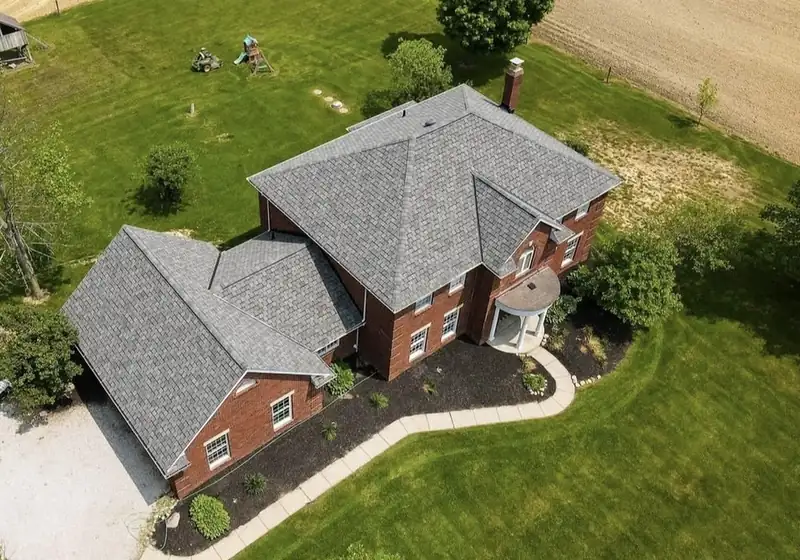
Matching the old roof
Old shingles fade. New shingles of the same color look darker next to them. For a small addition, owners sometimes accept the mismatch. Over time, sun fades the new section and the gap shrinks.
If the old roof has seven to ten years left, many owners choose a full replacement. That gives one color, one warranty date, and no weak joint between old and new.
Matching pitch and framing
We match the new roof pitch to the old one when possible. A different pitch changes snow loads and how water moves across the joint. Low-slope sections need special membranes. We review framing plans before the walls go up.
Dormers
A dormer adds light and headroom. It also adds four roof joints: two cheek walls, a front wall, and two valleys. Each joint needs its own flashing. We install ice barrier under the dormer valleys, where snow piles up in winter.
Permits and plans
Additions need building permits. The roof is part of that permit. Your plan should show roof pitch, rafter size, and how old and new sections tie together. We work from your plans and walk the site with your builder. See our code and permit notes.
Cost basics
Additions cost more per square foot than simple roofs. Flashing and cuts add labor. Match quality to the rest of the house. Read our roof installation cost guide for details, and see how a typical job runs in our process guide.
Common questions
Should I replace the whole roof when I add on?
Often yes, if the old roof has under ten years left. You get one color and no weak joint at the tie-in.
Can new shingles match old ones exactly?
Rarely. Sun fades old shingles. New ones look darker at first and settle over time.
Does a dormer need its own flashing?
Yes. Each dormer has several joints. Each one needs flashing sized for that joint.
Do additions need a permit?
Yes. Your plans and permit should cover the roof work.
Keep reading
New construction
How a new-build roof goes on, who handles permits, and what inspectors check.
Asphalt shingles
Shingle types, layers under the shingles, nailing, cost, and lifespan for Grand Rapids homes.
Roof installation cost
Sourced price ranges, cost drivers, and a line-by-line way to compare quotes.